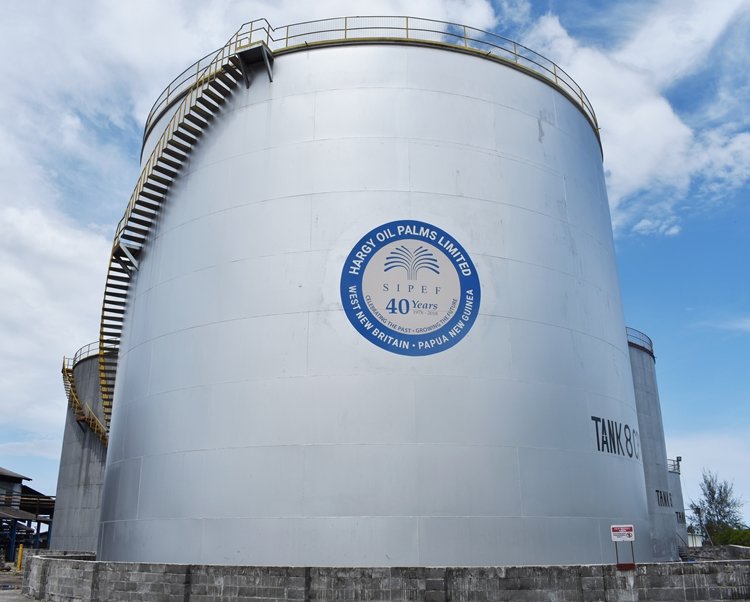
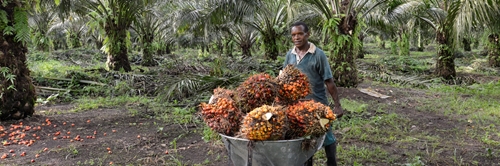
The listed agro-industrial group SIPEF has been part of Ackermans & van Haaren’s investment portfolio since 1997. Over the years, the initial 18% stake has increased to just over 40%. During that same period, spanning almost three decades, Ackermans & van Haaren, in partnership with the Bracht family as co-shareholders, has steadily transformed SIPEF into a company with a strong reputation in sustainable palm oil production and a promising future. It is yet another illustration of the strength of AvH’s core values: a long-term perspective, active ownership, sustainability and a focus on growth.
Geographic concentration and focus on core activities
In Ackermans & van Haaren’s 1997 annual report, this participation was described as follows: “SIPEF is a listed plantation holding company mainly active in the production and trading of palm oil, rubber, coffee, bananas and tea. It also has limited trading activities in pineapples, cocoa, quinine and ornamental plants. The plantations and activities are located in the Democratic Republic of Congo, Indonesia, Côte d’Ivoire, Liberia, Papua New Guinea, Brazil and Vietnam.” Although palm oil represented more than 60% of the group’s turnover at the time, SIPEF was then active in numerous areas and countries. Diversification... or fragmentation? In any case, SIPEF was not faring well during that period: one year later, its equity had halved to 1,002 million Belgian francs (approximately 25 million euros). In those early years, SIPEF was listed in Ackermans & van Haaren’s annual reports under the heading “Other investments”, reflecting the relatively small weight of this participation within the overall investment portfolio.
With Ackermans & van Haaren’s arrival as an active shareholder, a process of geographic concentration and increasing focus on the core activities in palm oil production was initiated. Five years later, the AvH annual report stated: “Despite a geographic spread across three continents, the group has increasingly concentrated its interests in four countries: Indonesia (...), followed by Côte d’Ivoire (...)” as well as Papua New Guinea and — still at the time — Vietnam. A number of non-strategic plantations and buildings had meanwhile been sold. “The group’s strategy will consist of further concentrating on its core activities and reducing its debt position.”
In addition to divesting non-strategic assets, SIPEF also invested in expanding its palm oil activities in Indonesia and Papua New Guinea, while continued debt reduction also remained a key area of attention.

ESG avant la lettre...
In 2006, the annual report stated that almost half of turnover was generated in Indonesia. In Papua New Guinea, the expansion of the available acreage was continued, with the note that the oil palm planting programme would be completed in 2007. The historically important activity on the African continent had already been reduced to Côte d’Ivoire, with a banana plantation in Abidjan. One striking paragraph read: “Following a capital increase and the sale of a number of non-core activities, SIPEF has a healthy balance sheet structure enabling it to expand substantially further in the Indonesian palm oil sector. (...)” The same paragraph already pointed out that “the origin, ethical production standards and reliability of the products supplied are becoming increasingly important.” In 2005, SIPEF had already joined the Roundtable on Sustainable Palm Oil (RSPO). ESG avant la lettre...
The sustainability aspect was further sharpened in the 2007 annual report: “SIPEF wishes to position itself as a reliable supplier of high-quality agricultural raw materials to the processing industry, with sustainability set to play an important role in the future. (...) Certification processes are ongoing in both Indonesia and Papua (sic) in order to be a leader in the sector in this area as well.”
By 2009, Ackermans & van Haaren’s stake in SIPEF had increased to approximately 21%, while SIPEF already contributed almost 8% to the result of the participations that year (excluding capital gains). According to the 2009 annual report, SIPEF had once again recorded a record year. “Sipef aims to grow as quickly as possible into a medium-sized player in the palm oil sector, with additional acquisitions of good agricultural land” in North Sumatra (Indonesia) and Papua New Guinea. SIPEF’s increased importance in Ackermans & van Haaren’s investment portfolio also led AvH in 2009 to introduce a fifth reporting segment, namely “Energy & Resources”. On the one hand, this reflected the growing importance of the profit contribution from, among others, SIPEF. “On the other hand, it provides an accurate picture of AvH’s strategy to also focus on emerging markets and sectors such as renewable energy and resources.” That same year, 2009, SIPEF obtained its first RSPO certificate and became one of the first companies to achieve full certification for its own plantations, as well as for all its smallholders, for all its activities in Papua New Guinea.
Continuing to grow sustainably
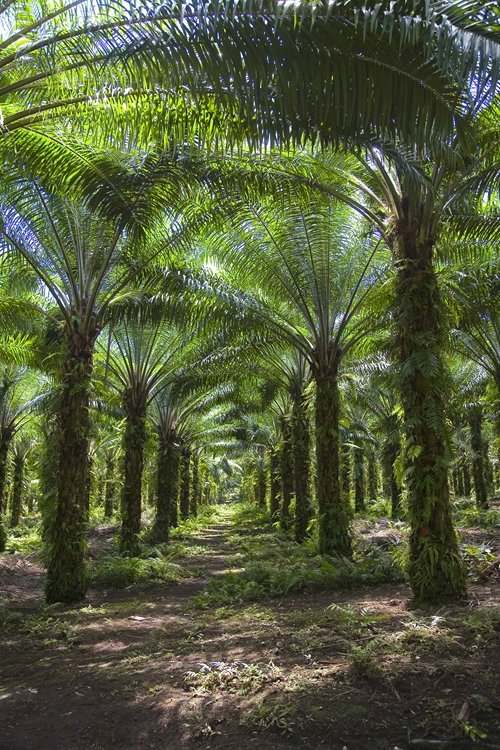
Today, SIPEF is one of Ackermans & van Haaren’s core participations and AvH’s stake has risen above 40%, while the long-standing partnership with the Bracht family as co-shareholder continues to be respected and maintained. SIPEF delivered record results in 2025 and positions itself as an agro-industrial group specialising in the sustainable production of certified palm oil in Indonesia and Papua New Guinea and bananas in Côte d’Ivoire. For 2026, SIPEF’s palm oil production is expected to amount to approximately 470,000 tonnes, while banana exports from Côte d’Ivoire are expected to increase to around 55,000 tonnes.